

Inspired by Dear Abby — a column my mother, Ann, loved — Ask Ann is a curated space for spiritual perspective on everyday life questions.
Visitors may submit questions below. If selected, Ashley will channel her late mother, Ann, and share considered, maternal guidance shaped by experience and quiet wisdom. Responses are published on this page.
The Ask Ann Advice Column is updated approximately once per month. Posting schedules may vary during periods of travel, holidays, or events.
Questions may address any situation where practical, motherly counsel is sought. Example topics include interpersonal conflict, family decisions, or everyday ethical dilemmas.
All submissions become the property of Ashley Wong / Made by a Real Witch™ and may be edited or shortened for clarity and publication. Submissions do not receive private responses outside of this website.
Personal information — including last names, phone numbers, and email addresses — is never shared publicly. If you wish your first name to remain private, please indicate this at the time of submission and a substitute name will be used.
In memory of Ann Harrison 1939-2023
Featured Q/A
“New”
Dear Ann,
I recently shared some information with a friend, who then turned around and shared my personal business with others. Do I confront her or take a step back?
Disappointed
Dear Disappointed,
Take a step back, and then decide whether a direct conversation is worth it. If she shared something private after you trusted her with it, that is a breach of confidence, and you do not need to pretend it was harmless.
The best first move is to step back and decide whether you still want the friendship. If you do, speak plainly and calmly: “I told you that in confidence, and I was hurt that you shared it. I need my private matters to stay private.” Then see what she does next. If she respects that, fine. If she brushes it off or repeats the behavior, keep her at a distance and stop sharing anything personal with her.
Best of luck.
~ Ann
* * *
“New”
Dear Ann,
My best friend always turns every conversation back to herself. How do I get a word in?
Sue
Dear Sue,
When someone keeps redirecting the conversation to themselves, it’s often a habit, but it’s still okay to interject. You don’t need to wait for the perfect opening - calmly say, “I want to finish what I was saying,” or “Can I share something too?” without apologizing. You can also bring it up gently at another time: “I’ve noticed I don’t always get a chance to share. A lot is happening in my world and I would love the opportunity to tell you about it.” A good friend will hear you and adjust; if not, that tells you something important. The best friendships are balanced. You both share. You both listen.
~ Ann
* * *
“New”
Dear Ann,
I am having an issue with my daughter aged 28. She has recently estranged myself and my husband. She says it's due to my disrespect towards her. I have not disrespected her at all. I am of the belief that her husband doesn't like the fact that I've told her that she has a voice in her relationship, that she doesn't have to go with all of his "rules". He doesn't discuss, he just tells her the way things are going to be. I told her that if she doesn't agree with them, that she is allowed to say so. Because of that I'm not allowed to see her or my granddaughter for the past 6 months
Sandra
Dear Sandra,
This is a painful place to be, and I’m going to speak to you the way a steady, grounded mother would. Right now, your daughter has created distance and named “disrespect” as the reason - even if you don’t agree with that, it’s still her experience. When adult children pull away, it’s often less about one moment and more about how they feel over time. The most helpful thing you can do isn’t to argue your intent or focus on her husband, it’s to gently turn your attention back to the relationship with her. Reach out in a calm, non-defensive way and say something like, “I can see you’re hurt, and that matters to me. I may not fully understand, but I want to. I’m here when you’re ready.” Leave space for her to come forward. At the same time, be honest with yourself about how your concerns about her marriage may have come across - sometimes what feels like support to a parent can feel like pressure or interference to someone trying to manage their own life. You don’t need to abandon your instincts, but you do need to respect that it’s her relationship to navigate. Keep the door open, keep your tone soft, and resist the urge to push or prove your point. Reconnection, if it comes, will come through patience and a willingness to listen more than speak.
Wishing you well.
~ Ann
* * *
Dear Ann,
I’m a mother of two children - ages 8 and 11 - and I’m married. My husband and I both work full time. While my husband and kids will help with chores when I ask, I’m exhausted from always having to be the one who asks.
I don’t want to feel like the “bad guy” constantly pointing out what needs to be done. It feels like I’m carrying the weight of the entire household.
How do I get them to step up and help more without having to direct everything?
Sincerely,
Exhausted
Dear Exhausted,
What you’re feeling isn’t just about chores, it’s about being the one who has to notice everything.
Right now, your household depends on you to manage, delegate, and follow up. That’s a heavy role on top of everything else you’re doing.
The goal isn’t to ask more - it’s to stop being the manager.
Have a calm conversation with your husband outside of a stressful moment. Let him know you need shared responsibility, not help when asked.
For your children, assign consistent, age-appropriate responsibilities so you’re not repeating yourself.
There may be resistance at first, but consistency matters. Step back enough to let others step in.
You’re not asking for help. You’re asking for partnership.
~ Ann
* * *
Dear Ann,
I don’t mind cooking or grocery shopping, but I really dislike having to plan meals for my family every week. Coming up with ideas that are healthy and not repetitive feels like a chore in itself.
How can I create a meal plan that works, stays balanced, and doesn’t get boring?
Thank you,
Brenda
Dear Brenda,
For many people, it’s not the cooking - it’s the constant decision making that becomes exhausting.
Instead of planning from scratch each week, build a small rotation of meals your family already enjoys. Even 10 to 12 reliable options is enough.
You can assign simple themes to days or repeat a weekly plan for a few weeks at a time. Most families don’t need constant variety - they need meals that are easy and dependable.
If possible, involve your family by having them choose between options or suggest a few favorites.
Meal planning doesn’t need to be creative to be effective. It just needs to work.
~ Ann
* * *
Dear Ann,
My husband and I have been married for nearly 40 years, and over the decades we’ve shared many conversations about major events in the news. One that has stayed with us is the O.J. Simpson case. Back in 1994, we watched the infamous white Bronco chase together on television and followed the trial as it unfolded. We later paid attention to the civil suit, the release of If I Did It — the book O.J. Simpson wrote and later lost control of to the Goldman family — and the many legal troubles he faced in the years that followed. From everything I’ve seen and read over the years, I’ve always believed he committed the crimes. The If I Did It book — presented as hypothetical but written by Simpson himself — cemented it for me.
My husband, however, tends to see the good in people and has always maintained that O.J. was innocent. From my perspective, that feels like minimizing or overlooking the seriousness of abuse and violence. Even though O.J. Simpson has now passed away, we still find ourselves arguing about this from time to time.
So who is right?
Sincerely,
Justice
Dear Justice,
After nearly 40 years of marriage, the two of you have clearly built a life that can withstand the occasional disagreement — even a long-running one like this. Big public cases often leave people with strong feelings, and it’s very common for thoughtful people to look at the same set of events and come to different conclusions. Your husband’s tendency to look for the good in people and your instinct to take the evidence seriously simply reflect two different ways of seeing the world. Neither of you is likely to persuade the other at this point, and that’s alright.
Sometimes the healthiest choice in a marriage is learning which conversations are worth continuing — and which ones have run their course. The next time the subject arises, you could gently say, “Well, I suppose this will remain one of our great unresolved debates,” and then change the subject to something more pleasant. After all, there are far better things to spend your time discussing than a case from thirty years ago.
In the end, the only people who truly knew what happened that night are no longer here: Nicole, Ron, and O.J. The rest of the world can only speculate. It may be kinder to let that chapter of public history rest with them. Agreeing to disagree is not a failure in a relationship; often it’s a quiet sign of wisdom and respect.
Kindly,
~ Ann
* * *
Warning. The following Q/A - regarding the death of a child/abuse - may be upsetting.
Dear Ann,
I am a paramedic and have witnessed the final moments of many lives — people I tried to save but ultimately could not. Over time, I came to understand that birth and death are natural parts of the human life cycle. Because of that, death itself has rarely troubled me in the way people might expect.
But there was one experience that has stayed with me.
I responded to a call involving a small child who had suffered severe head trauma at home. The death was officially ruled an accident, but something about the situation has never sat right with me. The child died in my arms.
Since that day, I have not been able to let it go.
I am currently in therapy and on stress leave, and while those supports have been helpful, the memory of that moment still returns. I think about that child often and find myself feeling emotionally stuck — as though I’m suspended in a kind of empty void that I can’t seem to move beyond.
What can someone do when an experience like this refuses to leave them?
I am haunted by this.
Sincerely,
Rex
Dear Rex,
The fact that this moment stayed with you does not mean you are weak — it means you are human. Paramedics witness things most people will never see, and while experience can help us understand that death is part of life, the loss of a child reaches a deeper place in the heart. The fact that you are in therapy and taking time to recover shows wisdom and strength, not failure.
It may help to remember that in that child’s final moments, they were not alone. They were held by someone who was trying to help them. Even when the outcome could not be changed, your presence still mattered. Sometimes our minds return to these moments because they feel unresolved, but not every tragedy has an answer that will bring peace.
For now, be gentle with yourself and allow healing to take time. Keep leaning on the support you already have, and when the memory surfaces, try to remind yourself of the truth: you showed up, you did your best, and you cared. Over time, that moment can become something you carry with compassion rather than something that traps you in it.
Sending gentle hugs your way.
~ Ann
* * *
Dear Ann,
I’m a 25-year-old woman with a family member who constantly questions me about my personal life — whether I’m in a relationship, if I plan to get married, and whether I intend to have children someday. She tends to grill me about these things whenever we’re together. I don’t think she realizes how intrusive it is, but the questions come up again and again.
I know she cares about me, and I don’t believe she’s trying to be hurtful. At the same time, the constant curiosity feels very personal and uncomfortable. My choices as an adult are private, and I don’t feel they should be open for ongoing discussion.
I would like to set healthy boundaries with her, but I’m not looking to argue or damage the relationship. Lately, I’ve even started leaving the room when she’s around just to avoid having the same conversation yet again.
How can I shut this down in a respectful way so it doesn’t keep happening?
Annoyed
Dear Annoyed,
Families can be a blessing and a handful all at once, can’t they? When relatives begin poking into your personal life as though they’re entitled to every detail, it’s a signal that it’s time to establish some boundaries. You don’t owe anyone an explanation about your relationship status, marriage plans, or whether you intend to have children simply because you share a last name.
Start by keeping your tone calm and light. A simple response such as, “That’s something I prefer to keep private,” or “I’ll let you know if there’s ever any news to share,” can go a long way. When said kindly but without apology, most people will understand the message. And if they don’t - change the subject. Ask them a question instead. People love to talk about themselves and it shifts the spotlight off of you.
If they continue to press for answers, despite your efforts, it’s perfectly acceptable to excuse yourself — refill your coffee, step away for a moment, or turn your attention elsewhere. At that point, you’re not being rude; you’re reinforcing a boundary that your personal life isn’t open for ongoing discussion. In time, most people stop pressing when they realize the door simply isn’t open.
You can love your family and still protect your privacy. Good boundaries are not walls. They’re fences with gates you control.
Warmly,
~ Ann
* * *
“New”
Dear Ann,
My partner and I have a weekly date night every Friday, and we take turns paying, but I’ve started to notice a pattern. When it’s my turn to cover the evening, we end up doing more expensive things like concerts, movies, or going out to a nice restaurant. When it’s his turn, our plans tend to be simpler — things like fast food, ice cream, a walk, or a bike ride.
I genuinely enjoy both types of dates, so it isn’t about needing everything to be fancy. The problem is that the financial side has started to feel uneven, and I’m not sure how to bring it up without creating tension. I’ve also noticed that most Saturdays he buys a new video game or gaming accessory, which tells me that money isn’t the issue and - from where I stand - he is making selfish choices. I am feeling a little used even though we get along well and genuinely enjoy each others company. I don’t want something that is seemingly small now to turn into a bigger problem where I walk away. Right now, I feel like the situation is salvageable if handled correctly.
I’d like our date nights to feel more balanced, but I’m unsure how to approach the conversation. Would it be better to start splitting the bill on Fridays, or is there another way couples usually handle something like this?
Sincerely,
Shelley
Dear Shelley,
It sounds like the two of you have created something really lovely with your Friday date nights. Setting aside time each week to enjoy one another’s company is a wonderful habit, and it’s clear you value the relationship and want to keep it healthy. When something small begins to feel uneven, the best time to address it is exactly when you notice it — calmly and early, before resentment has a chance to grow.
Rather than focusing on what he spends on games or whether his choices feel selfish, try approaching the conversation from your own experience. You might say something like, “I’ve noticed that when it’s my turn to pay, our dates tend to cost quite a bit more, and it’s starting to feel uneven for me. Let’s find a way to keep our Friday nights fun but a bit more balanced.” Keeping the tone warm and practical helps the conversation stay about solving a shared problem rather than assigning blame. My best advice is to set a rough budget for date nights, split the bill, or alternate 2 fancy Friday night dates per month - one where you pay, the other he pays. That would help to balance things out and take the pressure off. Additionally, it is possible that he is unaware that a problem exists. A conversation will clear that up…and help you to feel seen, heard, and validated.
What matters most is that the two of you can talk openly and kindly about things. Healthy relationships aren’t built on perfectly equal spending — they’re built on fairness, communication, and mutual consideration. If he cares about you and the relationship, he will likely want to work with you to find a solution that keeps your Friday nights enjoyable for both of you.
Best of luck!
~ Ann
* * *
Dear Ann,
My roommate’s emotional support ferret keeps stealing my socks and chewing on them until there are holes. Is it wrong for me to ask for replacements? I'm a student and can't afford to buy new socks every 2 weeks.
Sincerely,
Cold Feet
PS Free psychic advice is also the only psychic advice I can afford.
Dear Cold Feet,
Okay, first of all, justice for the socks. 🧦😄 Emotional support ferret or not, that tiny chaos noodle is clearly running a black-market sock operation. You’re absolutely not wrong to ask for replacements, especially as a student on a tight budget. Emotional support animals don’t come with a free “destroy shared property” clause, and it’s reasonable to expect the owner to take responsibility for damage - even when the culprit is adorable and emotionally validating.
The easy, low-drama fix? Ask your roommate to either replace the socks as they’re ruined or help ferret-proof the space: a closed door policy, a dedicated ferret toy stash (ferrets love fabric…maybe sacrifice old socks on purpose), or a laundry bin with a lid. That way the ferret keeps its emotional support job, your feet stay warm, and no one has to escalate this into a campus-wide Sock Tribunal. Everyone wins — including the ferret, who honestly seems to be living their best life. 🦦💛
Warmly (pun intended),
~ Ann
* * *
Dear Ann,
My family, including my mother never call or are in touch with me. I’ve always been the one calling or texting them. I’m fed up always making the effort. Am I wrong to stop bothering with them and always be the one reaching out? Thank You 🙏
~ Maureen
Dear Maureen,
You’re not wrong. It hurts to always be the one making the effort, and it’s natural to get tired of reaching out when it isn’t returned. Relationships - even family ones - shouldn’t rely on one person doing all the emotional work. Stepping back isn’t being cruel; it’s listening to your own limits.
If you stop reaching out and they don’t step up, that says more about the dynamic than about your worth. You’re allowed to protect your energy and give your care where it’s met with care in return. Sometimes pulling back is simply self-respect, not abandonment. 💛
Sending love and comfort your way.
~ Ann
* * *
Dear Ann,
My daughter is four, and her great-grandmother passed away last December. She often tells me how much she misses her and wishes she could come back to see her. She even sleeps with a photo of herself and her great-grandma, which is both sweet and heartbreaking. Because she’s so young, I sometimes struggle with how best to navigate her grief. If her great-grandmother is somehow still around and has anything to share, I’d love to be able to pass that along to her one day. Any advice on helping a young child understand and cope with loss would be deeply appreciated. 🤍
~ Amanda
Dear Amanda,
Oh sweetheart, this is tender and you’re handling it with so much love already. 💗 At four, your daughter understands absence more than permanence, so when she says she misses her great grandma or wants her to come back, that’s her way of loving — not something you need to fix. Let her talk about her, keep the photo, tell stories, and say things like, “She loved you very much, and it’s okay to miss her.” That gives your child safety and reassurance without confusing her with ideas she’s not ready to fully grasp.
You don’t need to explain where her great grandma is in big, permanent terms yet. Keep it simple and truthful: “Her body stopped working, so we can’t see her anymore, but the love stays.” If your daughter wonders whether her great grandma is around, you can gently say, “Some people believe loved ones stay close in love and memories,” and leave it there — no pressure, no promises. What matters most is that your daughter feels heard, comforted, and not alone in her feelings.
Tell your daughter that she is not alone. Her great grandmother walks beside her. 🤍
You’re doing the right thing by letting grief be soft and loving, not scary. That’s a beautiful foundation she’ll carry with her.
Blessings to you and your family.
~ Ann
* * *
Dear Ann,
I need some advice. My husband still calls his parents “Mommy and Daddy.” When we were teenagers and dating, I found it funny and even endearing — it made him seem like a caring family man who wasn’t worried about appearances or macho crap. But now that we’re older, it’s childish and embarrassing. I’ve tried to talk to him, but he brushes it off, saying it’s something he’s always done - which is true. His parents encourage it, which makes it harder.
I’ve reached the point where I make excuses to avoid spending time with his parents in public because people stare and laugh. I don’t want to damage my marriage or create tension, but I also feel invisible and disrespected. How can I address this in a way that protects my marriage while still honoring my own feelings?
Thank you,
The Invisible Woman
Dear Invisible Woman,
Oh love, this isn’t really about the words “Mommy and Daddy” — it’s about you being dismissed and as if your feelings don’t matter. It made sense when you were young, and it also makes sense that it feels different now. People grow and it’s reasonable to expect some adjustments as we mature. Wanting that doesn’t make you controlling or unkind.
Here’s my advice, you’re not asking him to change who he is - you’re asking him to show a little consideration for you as his partner. A calm way forward is to stop debating whether it’s “right” or “wrong” and instead tell him how deeply this is impacting you. “I’m not trying to take something away from you, but when it happens in public I feel embarrassed and unseen, and it’s reached the point where I avoid spending time with your parents because of it.” A loving marriage leaves room for compromise - maybe he keeps it private at home, or uses “Mom and Dad” in public. If he continues to refuse even a small adjustment, that’s worth gently but firmly revisiting - because mutual respect matters. You deserve to feel like you’re standing beside him, not shrinking behind him.
Know that I’m sincerely wishing you well on your path.
Kind regards,
~ Ann
* * *
Dear Ann,
My three year old daughter talks to a ‘ghost’ in her bedroom. She is not scared or unhappy. Is there a way for me to know if this is an imaginary friend, a loved one on the other side who is visiting her or someone/something else? Do I encourage it, ignore it, or tell her to stop talking to it?
Concerned Mama
Dear Concerned Mama,
Little ones often have rich inner worlds, and a “ghost” in a child’s room can be anything from a lively imagination to a comforting sense of presence they don’t yet have the words to explain. Since your daughter is calm and content, take your cue from her—there’s no need to shut it down or make it bigger than it is. Instead, stay curious. Ask gentle questions like “What does your friend like?” or “How does it make you feel?” to understand whether this is simply pretend play—or something she interprets as loving and safe. Children tend to show you through their behaviour if something is troubling, so trust your instincts, keep the atmosphere light, and continue offering reassurance. If her “visitor” ever starts to frighten or upset her, you can set loving boundaries, but for now, your steady presence and open heart are the best guides.
~ Ann
Submit Your question
This page is dedicated to the memory of Ashley’s mother, Ann.
Born in Merseyside, England in 1939, Ann learned the traditional arts of palm reading, tea leaf reading, and playing cards from her mother, grandmother, and great-aunts in the 1940s. She later passed these practices on to her daughter during the 1970s and 1980s, preserving a family lineage rooted in observation, intuition, and lived experience.
Ann was a mother of four, a grandmother to three, and a great-grandmother to three. She spent the final years of her life in a nursing home in Northern British Columbia, where she continued to read tea leaves for fellow residents during afternoon tea.
Her readings became so sought after by residents and staff that she was given a permanent tea leaf reading station next to the gift shop, where eager advice seekers would stand in line to get their fortunes told for $20.
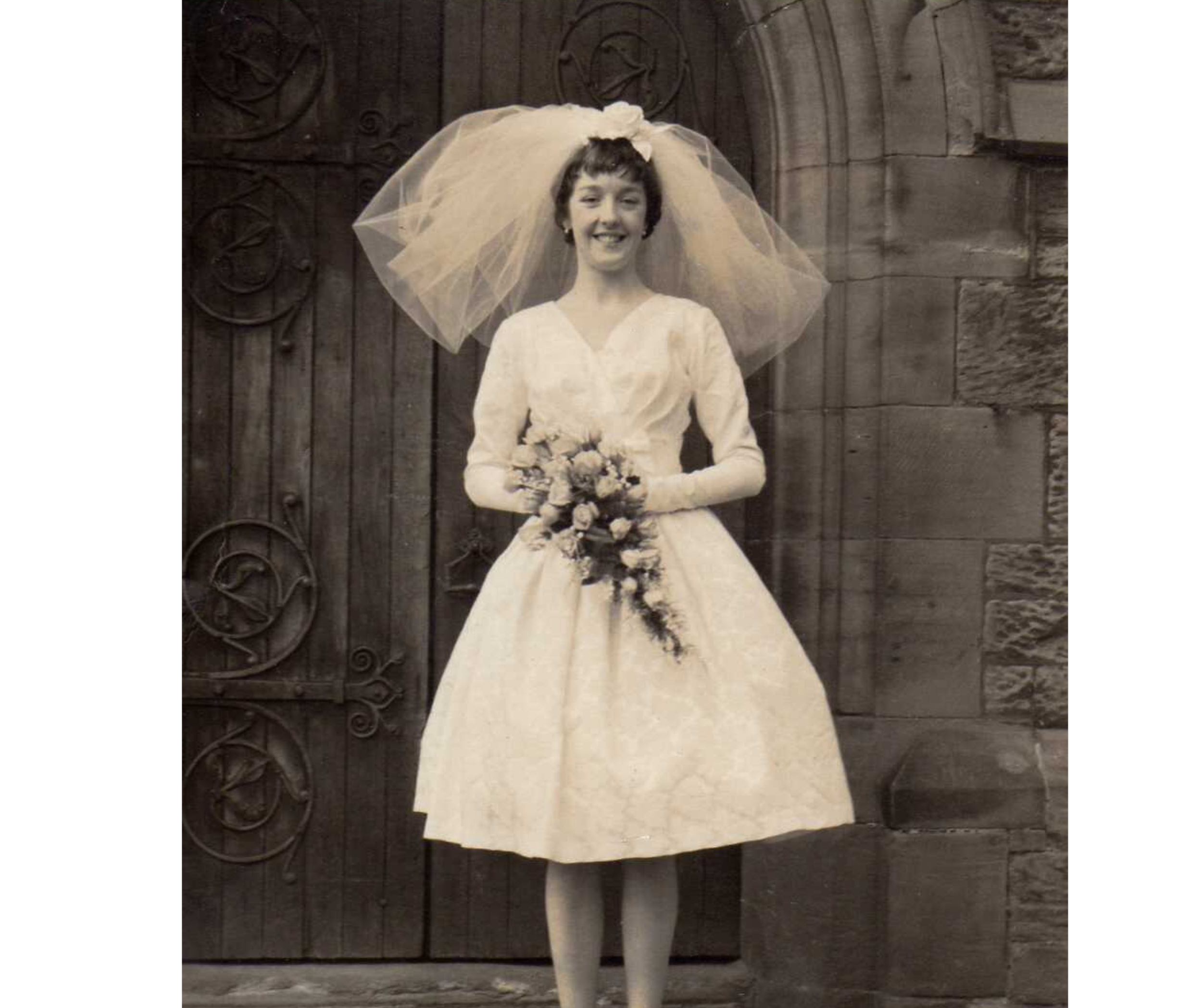
Ann on her wedding day in 1961. Gone but not forgotten. May she rest in peace.P.S. My mother would have loved this.
Copyright & Usage Notice
All written content and images on this website are protected under copyright law. No part of this page - including text, images, or visual concepts - may be copied, shared, reproduced, or adapted in whole or in part without prior written consent from the owner.
This work was created using a combination of AI tools and the original creative direction, vision and authorship of Ashley Wong.
Copyright © Ashley Wong. All rights reserved.
If you’re looking for more personal insight, I offer a few services that may be of interest.
Book a Tarot Reading
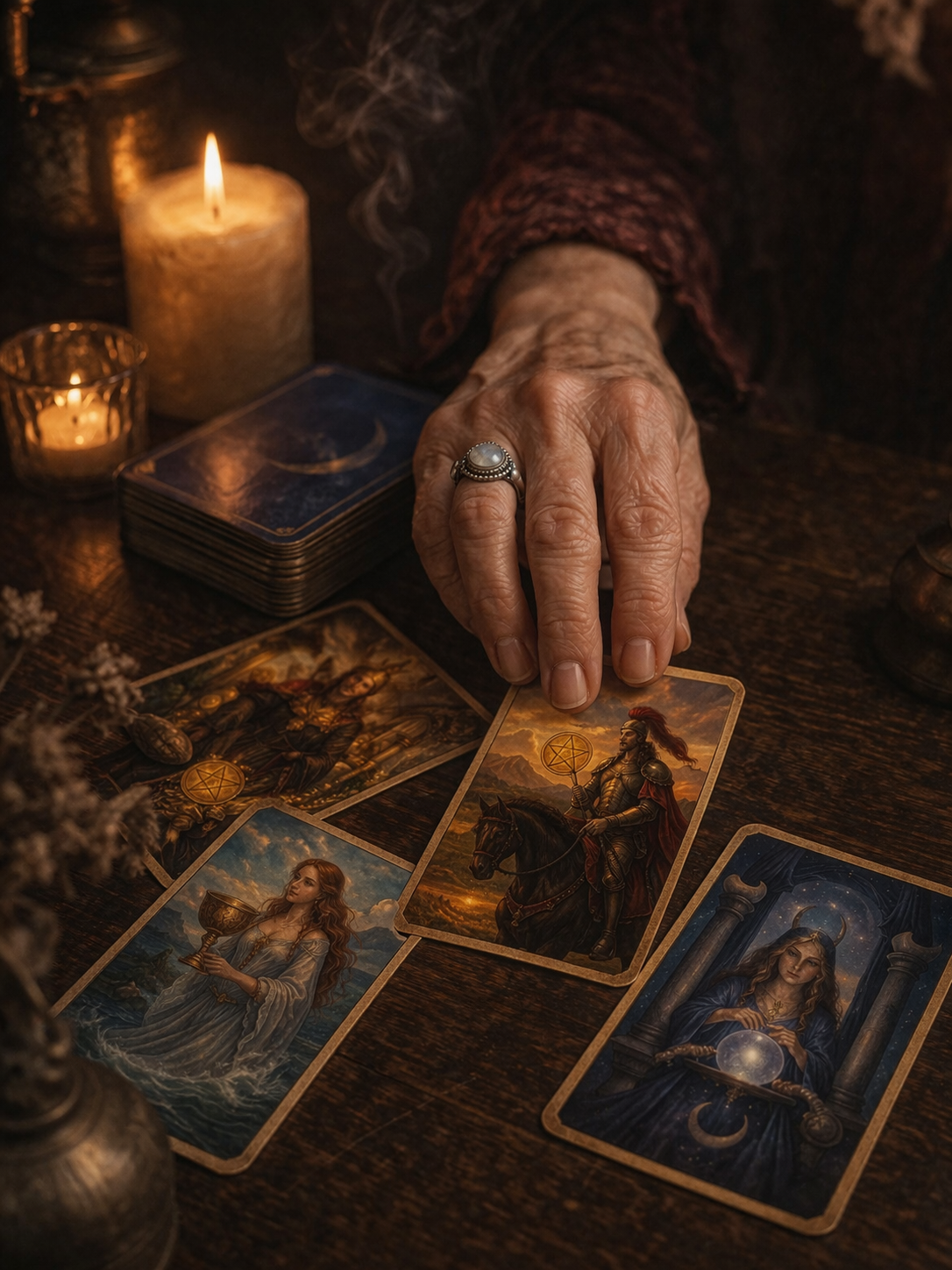
One-hour readings by phone, serving clients across Canada and the United States.
With over 30 years of experience, Ashley is known for clear insight, accurate predictions, and grounded, practical guidance.
Featured on CTV, interviewed on CBC Radio, and recognized across multiple publications. Let Ashley provide the clarity you need to move forward with confidence.
Order A Numerology Report

Numerology is the study of the numbers that shape your life’s path - from birth through every stage of personal development.
Each Made by a Real Witch™ Numerology Report is thoughtfully prepared and averages 6–7 pages in length, offering detailed, personalized insight based on your unique information.
Delivered by email, your report becomes a lasting reference you can return to for years to come.
Order a
past Life
Reading
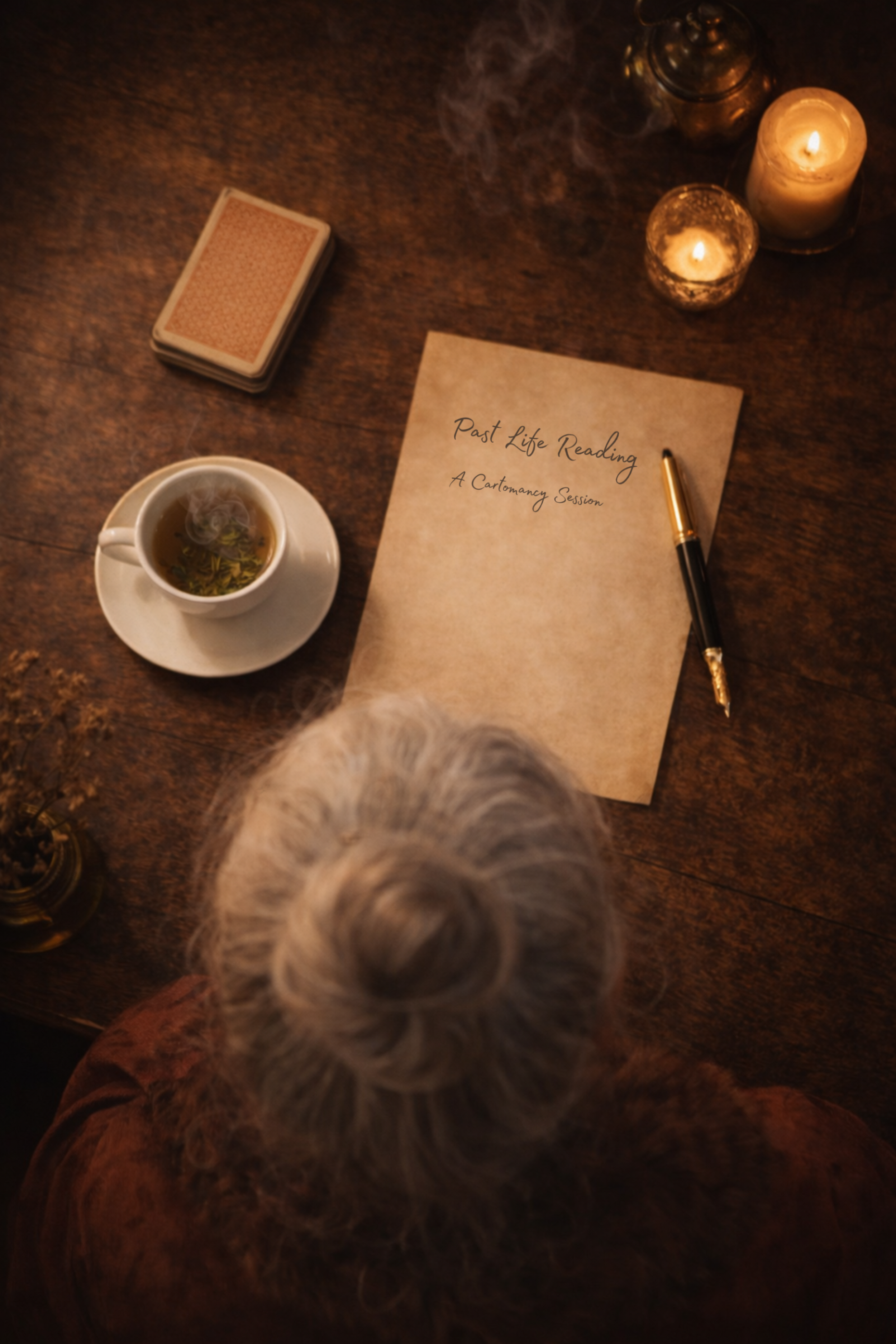
Past life readings explore the lives you have lived before - across different times, places, and identities - and how those experiences may still influence you today.
Using traditional cartomancy methods passed through generations, Ashley uncovers meaningful details with a grounded, respectful approach to this work.
Your Made by a Real Witch™ Past Life Reading is carefully prepared and delivered by email upon completion.